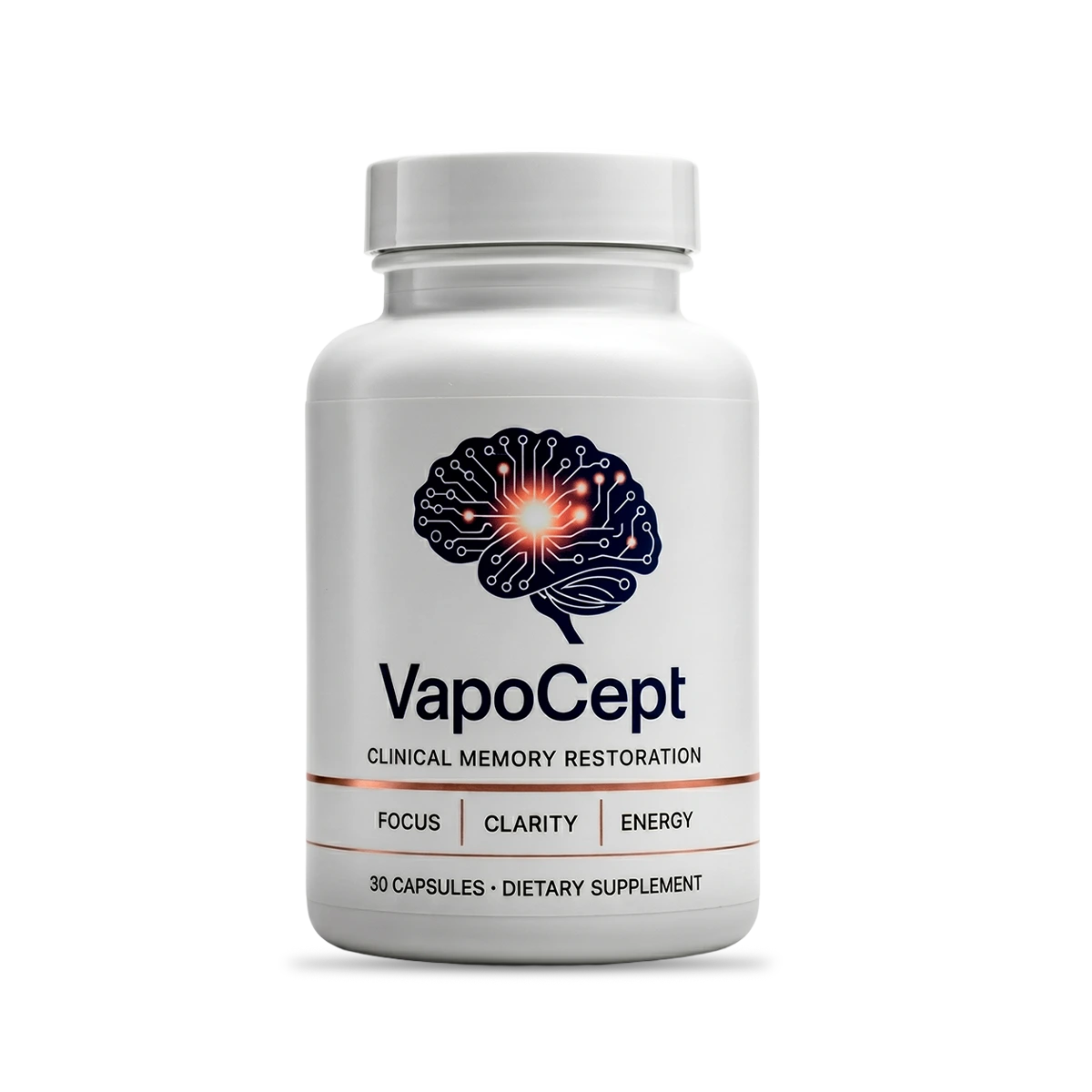
A correction worth making up front, because plenty of pages get it wrong: VapoCept® is not six botanicals. It is five plant extracts plus D-glucosamine, which is an amino sugar rather than a plant. That distinction matters if you are comparing formulas, and it is the kind of thing a label should make obvious.
Ginkgo Biloba Extract
Drawn from the leaves of one of the oldest surviving tree species, and the most-studied botanical in the memory category by a wide margin. The active fractions are flavonoid glycosides and terpene lactones, and the research rationale centres on vascular tone and antioxidant activity — support for blood flow through the dense capillary network that feeds neurons.
What the research says. Substantial, and genuinely divided. A six-week trial of 188 healthy adults aged forty-five to fifty-six, taking 240 mg of a standardised extract daily, found improved recall of appointments both immediately and after a delay — and no advantage whatsoever on recognition tasks. The large multi-year Ginkgo Evaluation of Memory trial found it did not reduce dementia incidence. Both halves are true and a reader deserves both.
Worth knowing. Ginkgo can affect bleeding time. Anyone on blood thinners or antiplatelet medication should talk to their prescriber first, and it is usually stopped before scheduled surgery.
Marigold Extract, as a lutein source
Marigold petals are the standard commercial source of lutein and zeaxanthin, carotenoids most people associate with eye health. The less publicised fact is that lutein accumulates in brain tissue as well as in the retina — and it accumulates, rather than passing through, which is unusual among the ingredients in this category.
What the research says. The most coherent story in the formula. Observational work consistently finds that higher lutein status in older adults tracks with better memory and processing speed. A twelve-month intervention in adults averaging just under seventy-four years old, taking 12 mg of lutein and zeaxanthin daily, reported improvements in complex attention and cognitive flexibility. Association is not causation and fifty-one analysable participants is a small study, but the mechanism is plausible and the safety record across decades is excellent.
Worth knowing. Lutein is fat-soluble. Taken with black coffee and nothing else, you absorb a fraction of it. Taken with breakfast, considerably more.
Turmeric Extract
The curcuminoids in turmeric root are among the better-characterised plant antioxidants, with well-documented activity against oxidative stress and inflammatory signalling — two processes involved in how brain tissue ages.
What the research says. Spectacular in the laboratory, modest in humans, and the gap between those two is almost entirely about absorption. Plain curcumin is absorbed poorly. An eighteen-month trial of forty non-demented adults aged fifty-one to eighty-four, using a bioavailability-enhanced form at 90 mg twice daily, reported improvements in memory and attention. Encouraging, and forty people is forty people.
Worth knowing. Take it with food. Turmeric can cause mild stomach upset on an empty stomach, and it stimulates bile flow, which matters with gallbladder disease.
Green Tea Extract
Concentrated catechins, principally EGCG, alongside the naturally paired amino acid L-theanine. Green tea has an unusual profile: mildly stimulating and mildly calming at the same time, a small amount of caffeine beside a compound associated with relaxed alertness.
What the research says. Good antioxidant data, and the caffeine–theanine combination has been examined specifically in crossover studies on attention and working memory, with measurable short-term effects on both. Long-term cognitive-aging data is thin.
Worth knowing. The caffeine is well below a cup of coffee, but it is not zero. Morning rather than evening if you are caffeine-sensitive or a light sleeper.
Bamboo Extract
The richest plant source of bioavailable silica, plus a set of flavonoid antioxidants. Silica is better known for connective tissue, hair and nails, and it appears here mainly as an antioxidant and structural-support contributor.
What the research says. Reasonable for connective tissue and antioxidant activity; close to nonexistent where cognition specifically is concerned. This is a supporting ingredient, and we are not going to pretend otherwise.
D-Glucosamine Sulfate Potassium Chloride
The one that is not a plant. An amino sugar the body makes naturally, stabilised here with potassium chloride for shelf life. Most people recognise it from joint formulas, and joints remain its best-established use.
What the research says. Indirect. Large observational datasets link habitual glucosamine use with lower inflammatory markers and better cardiovascular outcomes, and cardiovascular health and long-term cognitive health travel together closely. That is a reasonable argument and not a direct one; observational data cannot establish cause.
Worth knowing. Glucosamine is sometimes shellfish-derived. Confirm the source with the manufacturer if you have a shellfish allergy.
How these compare with single-ingredient products
If you have shopped this category you will have seen each of these sold on its own. A standalone Ginkgo Biloba brain supplement, a turmeric brain health supplement, a lutein capsule marketed for eyes, a green tea extract sold for energy. Every one of those is a legitimate product and often better value if you want one ingredient at a researched dose.
The argument for a combination is narrower than the marketing usually suggests: it covers several pathways without four bottles and four routines. That is a convenience and adherence argument rather than a potency one, and it is worth stating as such. Anyone looking specifically for Ginkgo Biloba cognitive support, or specifically for green tea extract brain health claims, can get those more cheaply on their own.
Why these six together
Two threads run through the formula. The first is oxidative load: brain tissue is about two percent of body weight and uses roughly a fifth of the oxygen you breathe, which generates reactive byproducts continuously, and five of the six ingredients contribute antioxidant compounds from different chemical families — the rationale being that no single antioxidant is active in every tissue compartment, water-soluble and fat-soluble included.
The second is circulation. Ginkgo's rationale sits here, and the vascular associations reported for glucosamine and green tea catechins belong to the same conversation. Lutein is the deliberate outlier, because it accumulates over months rather than acting daily — which is the clearest argument for taking a formula like this consistently rather than occasionally.
If you are shopping by ingredient
Plenty of people arrive at this category with a specific combination in mind, and that is a sensible way to shop. A brain health supplement with Ginkgo Biloba is the most common starting point, since ginkgo has the largest body of human cognitive research behind it. A memory supplement with Ginkgo and turmeric adds the antioxidant and anti-inflammatory side. A brain supplement with lutein and green tea extract covers the carotenoid that accumulates in neural tissue plus the caffeine–theanine pairing studied for short-term attention.
VapoCept® contains all of those in one capsule, which is the convenience argument rather than a potency one. If you want a single ingredient at a researched dose, buying it on its own is usually cheaper and entirely reasonable.
The other ingredients
Three, all named: bovine gelatin capsule, magnesium stearate, microcrystalline cellulose. The gelatin capsule means VapoCept® is not vegetarian, not vegan and not certified halal or kosher — stated plainly because it is better known before an order than after.
This guide is educational and summarises published research on individual ingredients. It is not a claim about the finished product, a diagnosis, or personal medical advice. VapoCept® is a dietary supplement and is not intended to diagnose, treat, cure or prevent any disease. Consult your own healthcare provider before starting any supplement.
See VapoCept® Packages