Four human trials sit behind most of what can honestly be said about these ingredients. Below is what each one actually measured, how many people were in it, and what it failed to find — because the null results are the part most supplement pages leave out.
A note on what a trial can and cannot carry
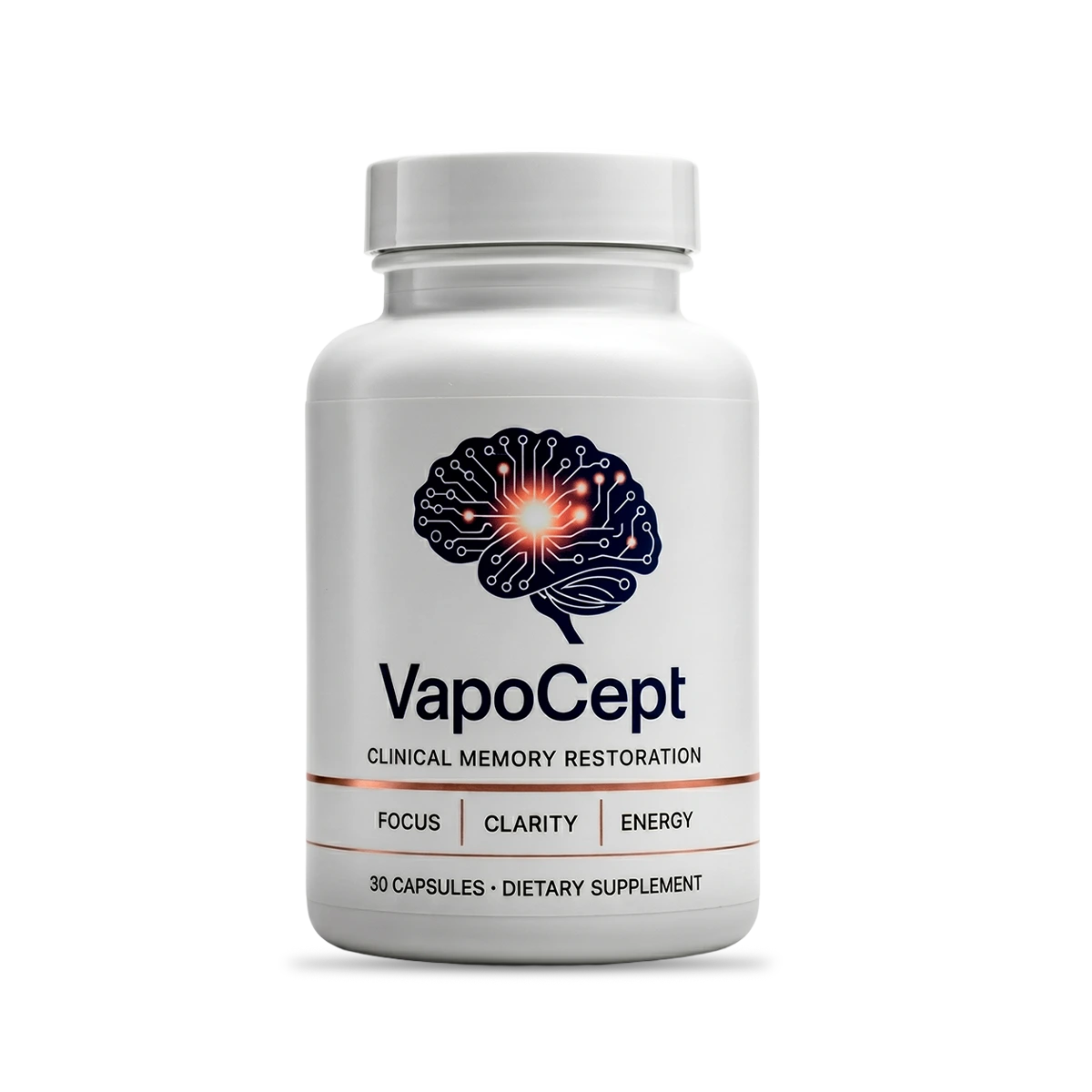
Two things are worth establishing before the studies. First, a trial on an isolated ingredient is not a trial on a finished product. Nobody has run a randomised controlled trial on VapoCept® itself, and any page implying otherwise is misleading you. What exists is research on the individual extracts, at particular doses, in particular populations.
Second, observational data and intervention data answer different questions. "People who eat more lutein score better" is a correlation that could run several ways. "People given lutein for twelve months scored better than people given placebo" is a far stronger claim. Both appear below, labelled.
Ginkgo Biloba: the most data and the most disagreement
Intervention evidence. A 2011 trial published in Phytomedicine enrolled 188 healthy adults aged forty-five to fifty-six and gave them 240 mg of a standardised extract daily for six weeks. Recall of appointments improved both immediately and after a delay, with the delayed measure the stronger of the two.
What the same trial did not find. No advantage on recognition tasks. The benefit was specific to free recall, not to memory generally — and that distinction gets dropped in most marketing summaries of this study.
The counterweight. The Ginkgo Evaluation of Memory trial, far larger and running years rather than weeks, found ginkgo did not reduce dementia incidence. A short trial showing a modest recall effect in healthy middle-aged adults and a long trial showing no preventive effect on disease are not contradictory — they are answering different questions — but you should know both before deciding.
Lutein from marigold: the most coherent story
Intervention evidence. A 2017 study in Frontiers in Aging Neuroscience followed participants averaging just under seventy-four years of age for twelve months on 12 mg of lutein and zeaxanthin daily. Complex attention and cognitive flexibility both improved relative to placebo.
The limitation. Fifty-one analysable participants. That is a small study, and a twelve-month trial with fifty-one people cannot settle a question on its own.
Why it still stands out. The mechanism is unusually plausible — lutein physically accumulates in neural tissue rather than passing through — a large body of observational work points the same direction, and the safety record spans decades. Plausible mechanism plus consistent correlation plus accumulating intervention data is about as good as this category gets.
Turmeric: a laboratory star with modest human numbers
Intervention evidence. An 18-month trial published in the American Journal of Geriatric Psychiatry in 2018 followed forty non-demented adults aged fifty-one to eighty-four taking 90 mg of a bioavailability-enhanced curcumin twice daily, and reported improvements in memory and attention measures.
The limitations. Forty people. And crucially, the form matters enormously: plain curcumin absorbs so poorly that a trial using a bioavailability-enhanced preparation does not automatically generalise to ordinary turmeric extract. This is the single biggest caveat on this ingredient.
Green tea: good short-term data, thin long-term data
Intervention evidence. The caffeine–theanine combination found naturally in green tea has been examined in crossover studies — including one published in Biological Psychology in 2008 — showing measurable short-term effects on attention and working memory, with a profile distinct from caffeine alone.
The limitation. These are acute studies, measuring hours. Whether a daily green tea extract contributes to cognitive aging over years is simply not established.
Bamboo extract and D-glucosamine: the honest answer is "not much"
Bamboo supplies bioavailable silica and flavonoid antioxidants. The evidence for silica in connective tissue is reasonable. The direct human evidence for bamboo extract and cognition is close to nonexistent, and we are not going to dress that up.
Glucosamine's case is entirely indirect: large observational datasets associate habitual use with lower inflammatory markers and better cardiovascular outcomes, and cardiovascular and cognitive health are closely linked. That is a reasonable line of argument. It is not evidence that glucosamine supports memory, and observational data cannot establish cause in either direction.
What none of it supports
No ingredient here treats, prevents, cures or slows any disease, including Alzheimer's disease and other dementias. None of it will restore memory that has already been lost. None of it works in days; every trial above ran six weeks at minimum and most ran considerably longer, which is why two to three months is a fair assessment window and two weeks is not.
And none of it outperforms the free interventions. The evidence for blood pressure control, sleep, aerobic exercise, hearing correction and social engagement is stronger than the evidence for any capsule in this category — a sentence that belongs on a supplement site more often than it appears on one.
Scientific references
Kaschel R. Specific memory effects of Ginkgo biloba extract EGb 761 in middle-aged healthy volunteers. Phytomedicine 2011. PMID 21802920.
Hammond BR Jr, Miller LS, Bello MO, et al. Effects of lutein/zeaxanthin supplementation on the cognitive function of community dwelling older adults. Frontiers in Aging Neuroscience 2017;9:254.
Small GW, Siddarth P, Li Z, et al. Memory and brain amyloid and tau effects of a bioavailable form of curcumin in non-demented adults. American Journal of Geriatric Psychiatry 2018.
Haskell CF, Kennedy DO, Milne AL, et al. The effects of L-theanine, caffeine and their combination on cognition and mood. Biological Psychology 2008. PMID 18006208.
These references describe research on individual ingredients at specific doses in specific populations. They are not studies of VapoCept® and do not constitute claims about the finished product. VapoCept® is a dietary supplement and is not intended to diagnose, treat, cure or prevent any disease. Consult your own healthcare provider before starting any supplement.
See VapoCept® Packages